

The Power of Empowerment Is Within Us
When we talk about empowering students, I think we often aim the spotlight in the wrong direction.
We talk about what students need to do.
What students need to become.
How students need to step up.
But empowerment is rarely a “them skill.”
It’s an “us skill.”
It’s our willingness to step back, remove our ego from the process, and trust that students can carry more than we think—if we’ve built the right foundation.
A Quick Story
In my home town (not where I work), I started a 4th-grade a cappella group for my daughter and some of her friends. They’re now in 5th grade. We call them the Portatonix.
This group has nothing to do with any school district. It’s unaffiliated with their elementary school. We rehearse at my house once a week. And our last rehearsal was mid-December.
This week, my daughter’s building principal heard about the group and wanted to hear them sing. Seven of the ten girls attend that one elementary school.
Parents reached out to me. The principal didn’t have a real plan—just: “Sometime this week.”
So I told the families: at some point, your child will get called down. Don’t be alarmed.
And I told my daughter: bring your pitch pipe, give starting pitches, and help the group begin.
On Tuesday, it happened. The principal called the seven girls down.
No rehearsal in over a month.
No teacher there.
No safety net.
They sang anyway.
It just so happened, their performance was recorded. I posted it in my Choral Clarity Collective for all my members to see!
Try SIGHT READING FACTORY and save 10% using code: choralclarity
What This Actually Teaches
Would it be better with a fresh rehearsal? Sure.
Would it be easier if I were there? Of course.
But the point isn’t “perfect.”
The point is this:
Empowerment means we stop positioning ourselves as the center of the process.
It means we create conditions where students can function without us.
It means we allow them to lead, to problem-solve, and to carry responsibility.
This wasn’t my 28-year program with nine a cappella groups.
This wasn’t a well-oiled machine.
It was seven 5th graders who believed they could do it.
And they did.
So yes—your students can, too.

Your Move This Week
Where can you step back so your students can step up?
Maybe it’s letting them run the warm-up.
Maybe it’s having a student give starting pitches.
Maybe it’s letting section leaders troubleshoot before you jump in.
Maybe it’s giving them a moment to figure it out instead of rescuing them quickly.

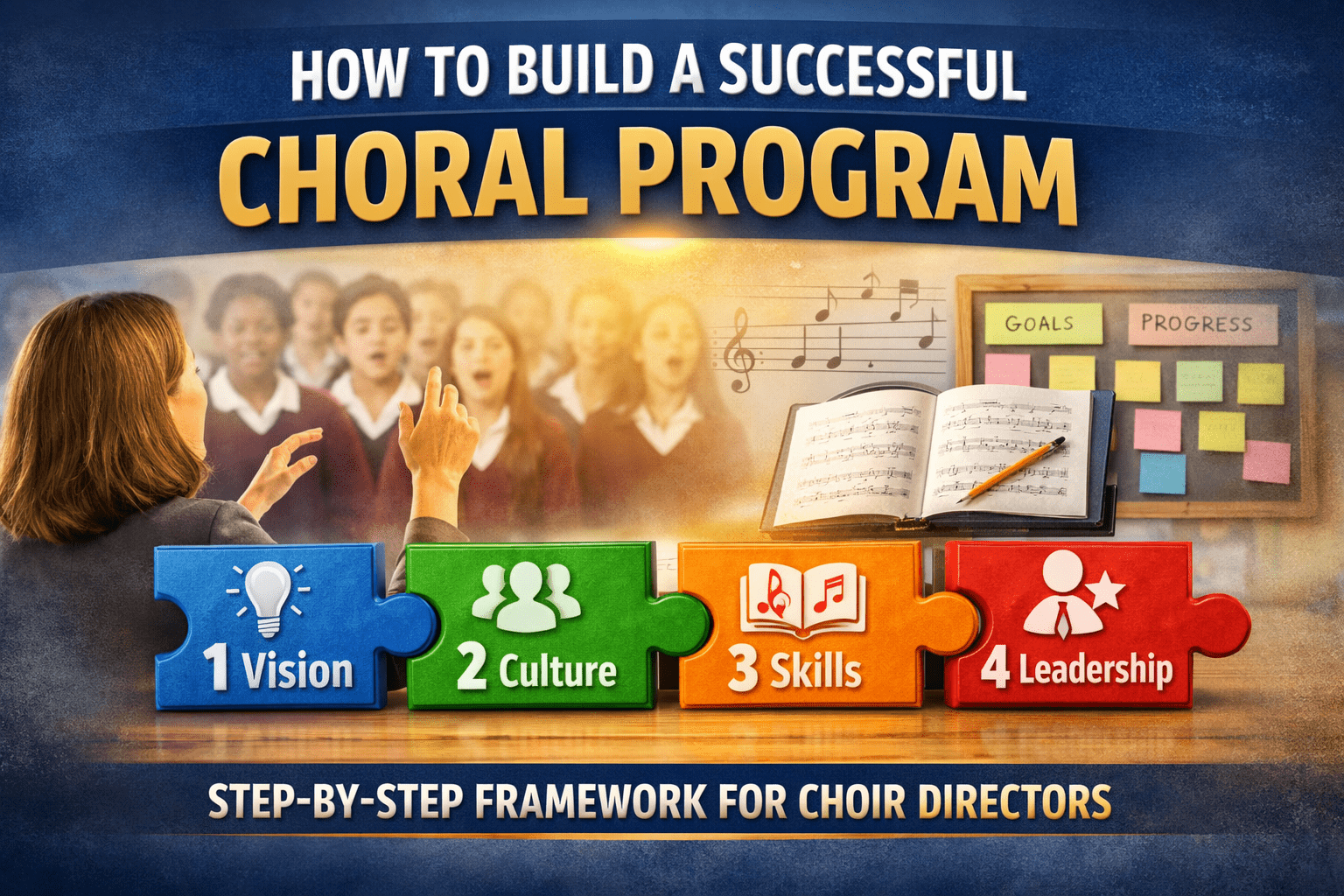
The Missing Piece: Clarity of Intention
Here’s the truth: empowerment doesn’t happen by accident.
It happens when your intentions are clear.
When students know what the room stands for.
When they understand the “why” behind what you’re asking.
When expectations are aligned with a mission, not just a moment.
Because students don’t rise to vague hope.
They rise to clear direction.
Empowerment becomes possible when we establish clarity first: who we are, what we value, and what we’re building together.
That’s the real work.
And once it’s in place, stepping back stops feeling like a risk.
It starts feeling like leadership.





Leave A Comment